Here are some basic facts about the Camino de Santiago.
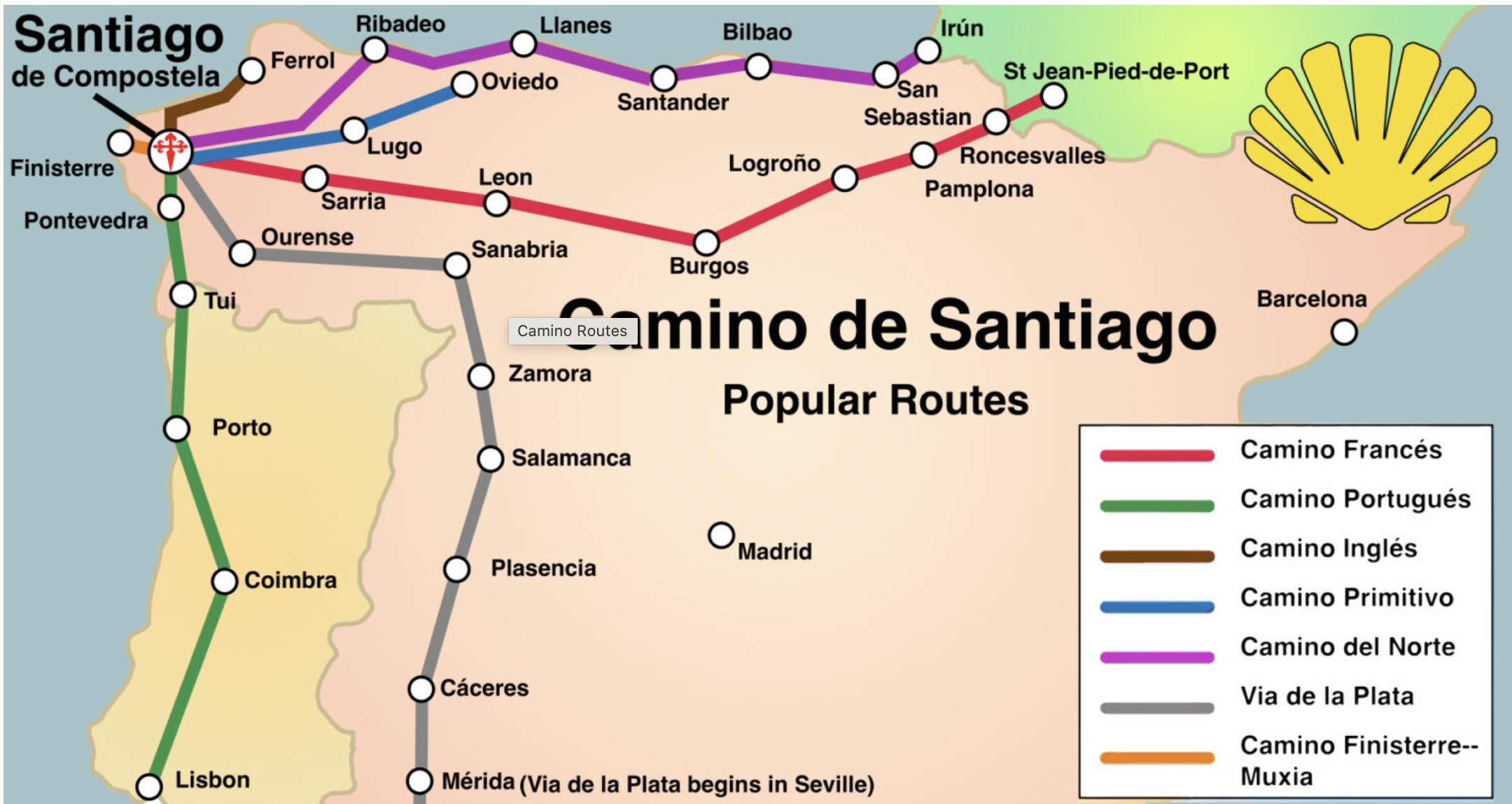
The Camino de Santiago is not a single path, but a network of paths mostly crossing Spain and Portugal, all ending in the Arch cathedral Basilica in Santiago de Compostela on the Atlantic coast of Spain. The purpose of the pilgrimage is to venerate the (supposed) remains of St James the Apostle, which were discovered in Spain in the 9th century AD. It is one of three great pilgrimages of Christianity along with Jerusalem and the Via Francigena that leads to Rome.
The Camino de Santiago was not always a popular pilgrim route, its first heyday being in the Late Middle Ages when the rulers of the brand new Kingdom of Spain promoted the Camino to increase trade, immigration, military/religious support from other parts of Europe, and a national identity distinct from their Moorish opponents. It was a 1957 book, ‘Road to Santiago’ by Walter Starkie which reignited modern interest in the Camino, an interest Generalissimo Francisco Franco’s fascist government supported heavily.
A Catholic can earn a plenary indulgence during a Jubilee year from a completion of the pilgrimage, which is made official by the filling out of an official passbook with stamps from, at the least, the last 100k of the journey and a Mass in the Cathedral of Santiago de Compostela. The next Jubilee year is 2027.
Over the centuries pilgrim attendance has been measured by the issuance of these passbooks, and the official completion of the passbook in Santiago. Recent attendance figures are plentiful, but made opaque by vague reporting. The numerous sites one can explore were unclear about the difference between “finishing” the Camino and “attempting” the Camino. The clearest reporting came from ‘Viajes’, a Camino De Santiago website https://viajecaminodesantiago.com/en/news/way-statistics-year/, which stated….
“As can be seen, a total of 446,039 pilgrims arrived in Santiago in 2023 and requested the Compostela. It’s important to note that not all pilgrims who arrive in Santiago request the Compostela, and the actual number is likely higher. Additionally, many pilgrims do not even reach Santiago but only complete segments of the Way.”
A variance of 50,000 existed in the statistics, including Camino de Santiago funded websites. Spanish citizens consistently comprised half of the pilgrim population.
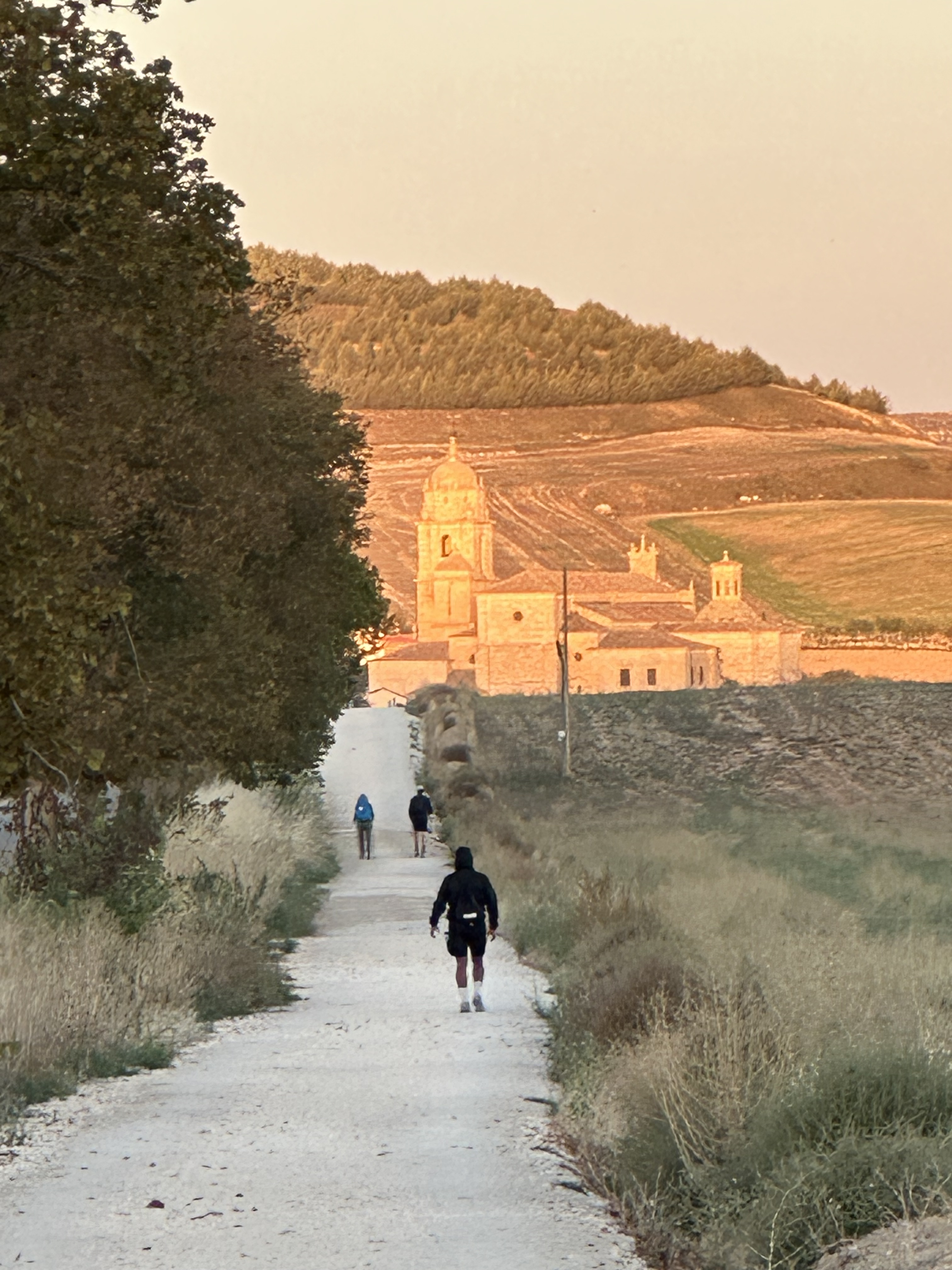
Early morning on the Navarra section of the Camino Santiago. Photo by author.
The Camino is maintained by numerous organizations and associations, including national and local Spanish governments, but it is considered the Crown property of the King of Spain and is overseen by the Consejo Jacobeo (Jacobean Council): https://www.cultura.gob.es/consejo-jacobeo/en/consejo-jacobeo-mcd.html, which consists of state, private and religious tourism officials, both elected and appointed.
All along the route are hostels, called albergues, which provide beds, shelter and other amenities. The services and quality vary greatly. There are also hotels and un-official hostels along the way if you need a bathtub for a night. But even if every hotel and albergue are full, every town on the Camino trail must guarantee any Pilgrim (with an up to date passbook) a place to sleep at night, even if it’s the floor of the local fire station.
Crime committed upon pilgrims is virtually non-existent and women are, by and large, able to walk the Camino alone and unmolested.

The cathedral in Compestella, the last stop for most pilgrims. Photo by author.


Staggering numbers. I wonder if it will be a record in 2025 for the Jubilee year.
LikeLike
I think it’s a guarantee. The Camino is growing in popularity both due to the beauty of the trail and the light ecological impact of the Camino; hearing more and more about tourism ruining lovely places….
LikeLiked by 1 person