
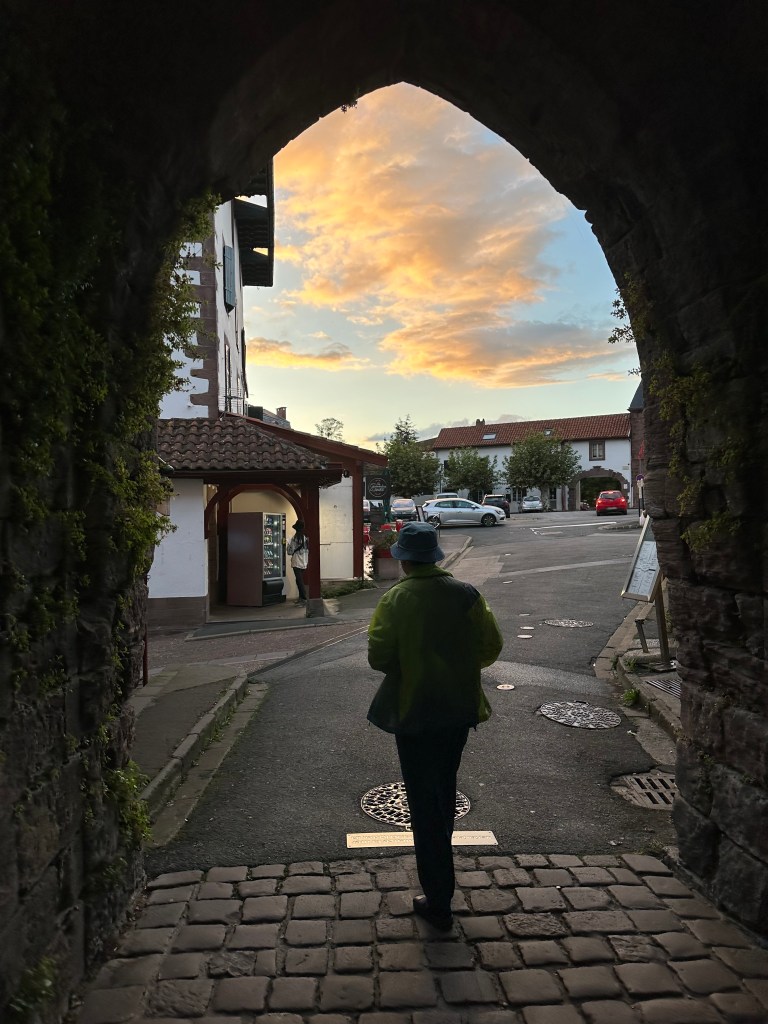
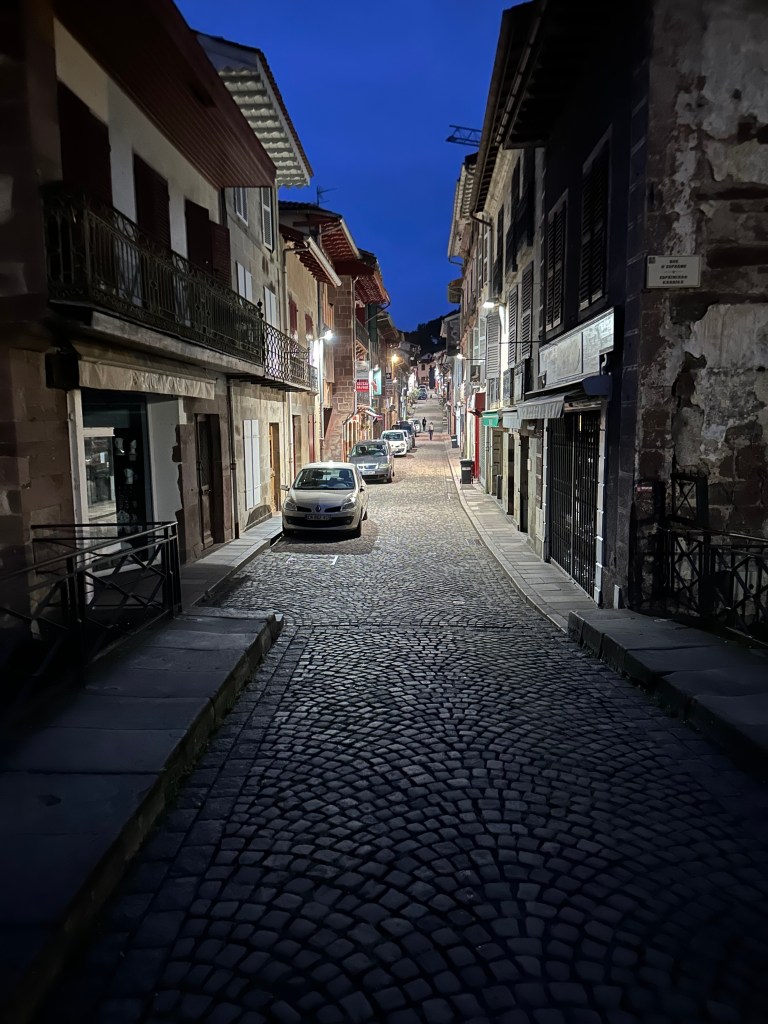
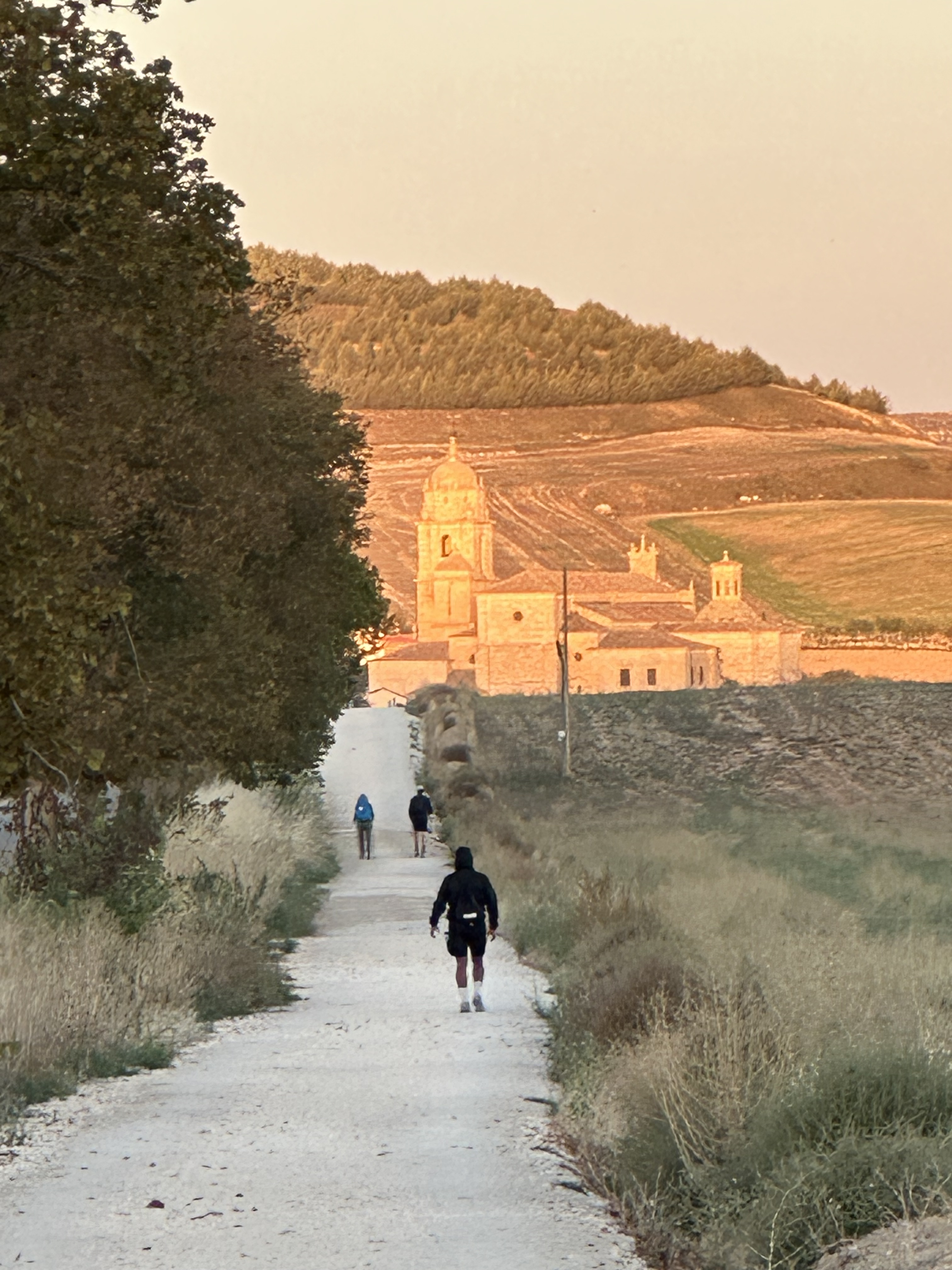
We left before the sun rose, walked through a quiet town, followed the yellow scallop symbols past a bend or two, and then we were here……
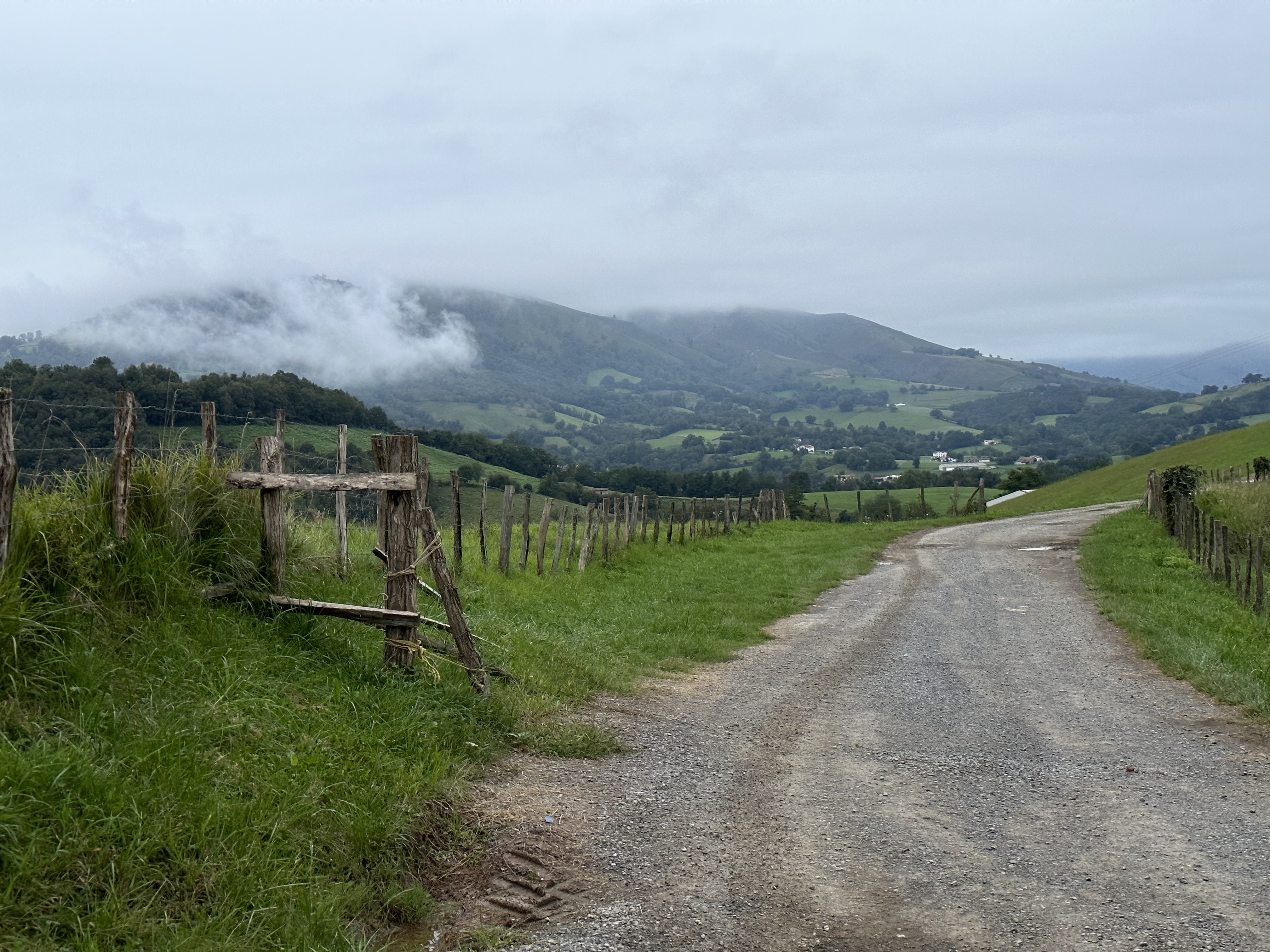
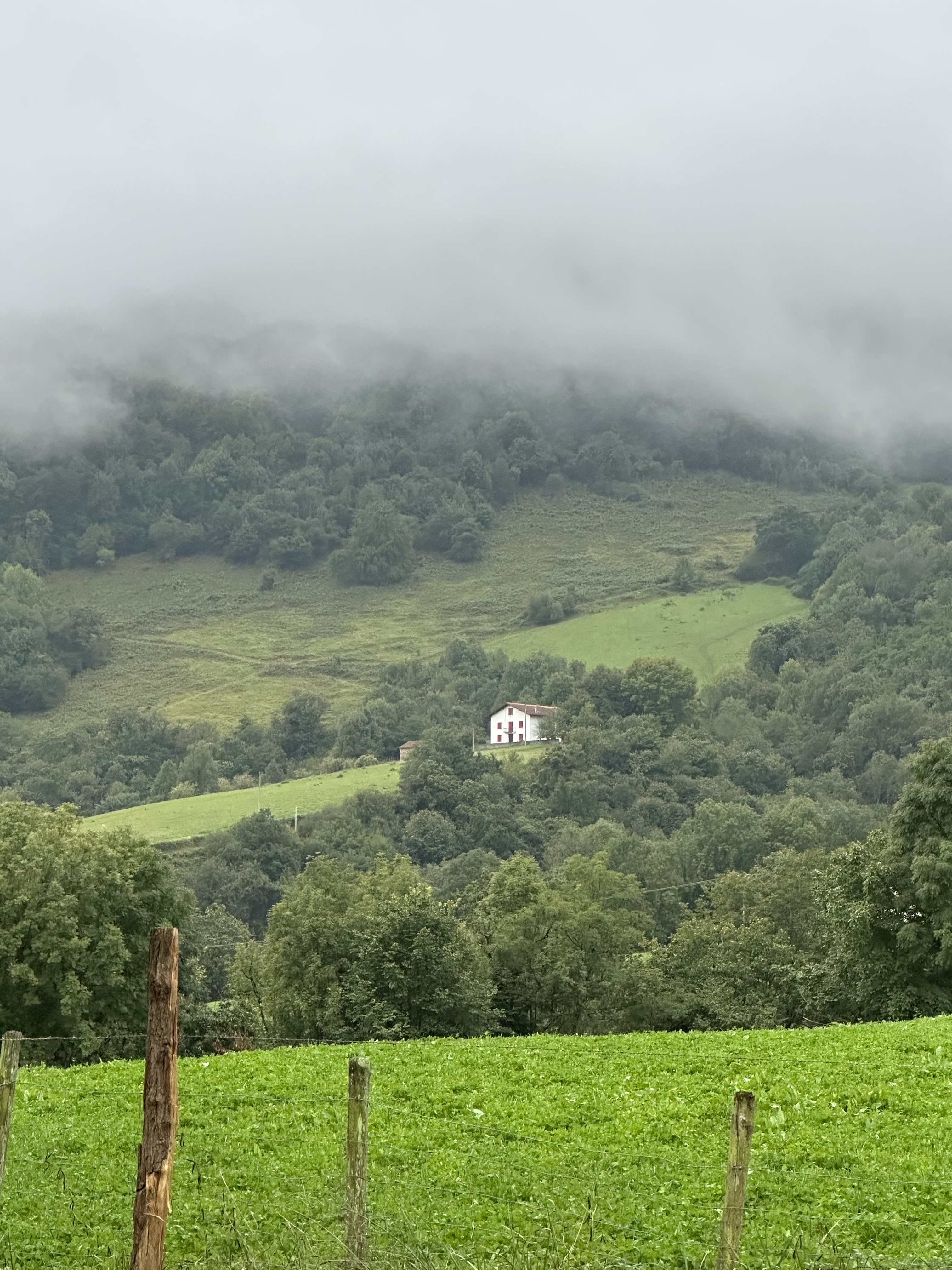
…so now what?
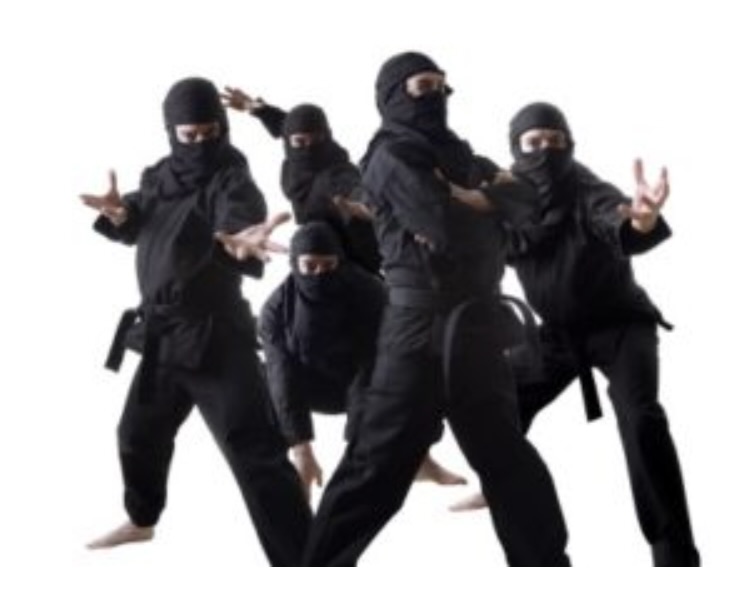
We both felt kind of, well, silly. And, well, we did look silly.
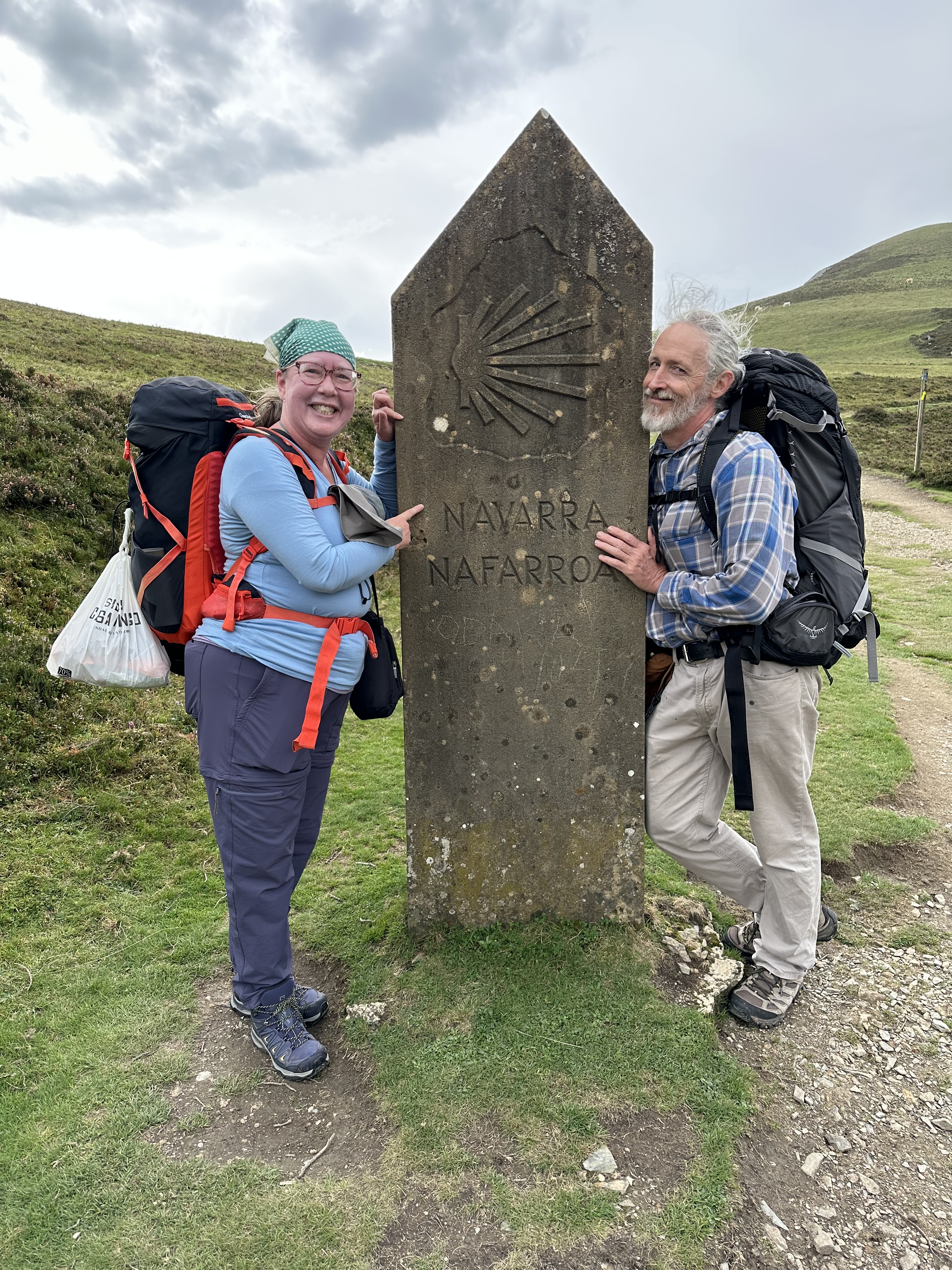
See?
And we were doing a thing that could be called silly, at best. To be truthful, what were we doing was incredibly stupid. We were leaving our warm homes finely stocked with beds and refrigerators and TV’s to walk a road we have never seen before so we can stay in cheap-ass Spanish hostels every night until we get to a big-ass church with the bones of a dead-ass Jewish guy.
The truth was we weren’t feeling silly, we were feeling vulnerable. And we were feeling vulnerable because we were doing one of the stupidest things you could ever do: Trust.
It would be obvious to every person who saw us that we were literally helpless pilgrims in a foreign land. We had to trust the path would be there, that the other pilgrims wouldn’t hurt us, that the locals wouldn’t try to scam us, that the weather would be alright: every bend in the road was another place where we would have to trust another set of strangers.
It’s a lot to think about as you take your first few steps on the Camino de Santiago. Which is why the planners of this route made the first part so bloody difficult you won’t worry about any thing non-corporeal as everything in your Corpor will be tired, damp and in pain.
On the first two days of The Camino de Santiago we walked up. We walked down. We walked forwards. We walked backwards. We walked easy trails, and we walked hard trails….mostly hard ones, truth be told. Amongst all the Camino rumors, legends and lies one hard truth everyone agreed on is that the first two days of the Camino Francias path are the hardest of the entire Camino. Pay attention to the phrase: hard truth.
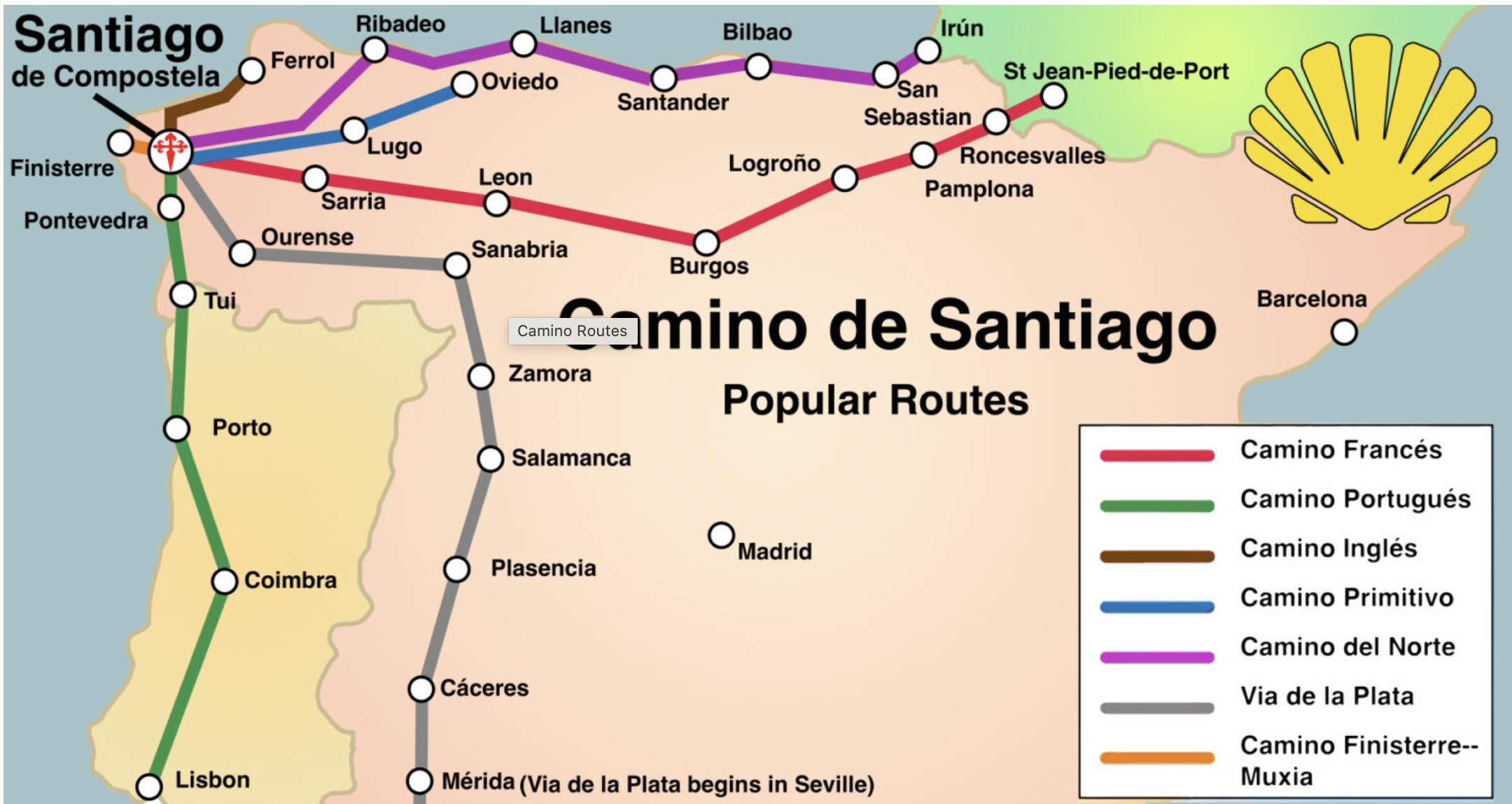
Our first day’s goal was near the Orisson Refuge, a famous mountain side albergue which was a little under 10 km away and halfway up the mountainside. The weird part was there was no room at the albergue. Or anywhere near there that we could reach on our first day after climbing up half a bloody mountain. Apparently the Camino was a lot busier than it was supposed to be. So what we had to do, and a lot of other people also had to do, was hike just past Orisson to a spot that had a Sacred Statue of the Virgin Mary, and then a van picks us up and takes us back to available beds at St Jean. Then, in the morning, the van will take us past all the hiking we will have done and back to the spot where we picked up, and we’ll continue on our way.
Which, I gotta say, it kinda messed with my head. And I’m glad it did. But more of that later…
The day’s walk was everything you want a hike in the mountains to be. We saw Basque sheep grazing and mountain Basque horses frolicking in the mist. We saw majestic views peeking out between the eye-level clouds that floated by. There was a food vendor along the way, and he was clearly a local dude selling local foods to the Pilgrims. In fact the chorizo, cheese and chocolate stocked Basque Food Van we stopped at was official enough to have a stamp that we could add to our Camino Passbook. All around his food wagon were pilgrims resting and refilling their water thingies: tattoodled young folk, middle aged couples from France and Canada, thirteen South Koreans and local folk who walk the camino every year. We ate a little, got our books stamped, and moved on down the trail, feeling hopeful.
A little later, when we arrived at the Orisson Refuge we found it to be in total contrast to our smiling ruddy-cheeked cheesemonger. This was an industrial albergue, built for speed and ease of service and nothing else. The main building housed the rooms and a cafeteria style restaurant with the standard fare of all Camino Kitchens, (the fare of which we will discuss in a separate post). Overlooking the vista of the Pyrenees was a large patio stocked with campground picnic tables with room for about one hundred twenty people. We were told that the half- empty patio is for paying customers only by an unsmiling waitress after we took out our own food for lunch. We crawled away and stood by the single free bench hidden behind some bushes and scrub grass next to the sewer lines. No smiling ruddy faced locals here. Also, I noticed the customers at Orisson where a little different than the Basque food cart. We had talked to few before being sent away, and they were mostly super fit and super intense people who had walked the Camino four times, seven times, nine times. Bankers from Hamburg. Lawyers from Philadelphia. Shiny, shiny people doing shiny, shiny things.
I took all my judgements and packed them up with the leftover Spanish ham and we finished our day’s walk by entering the clouds and walking aside the horses of the Pyrenees.
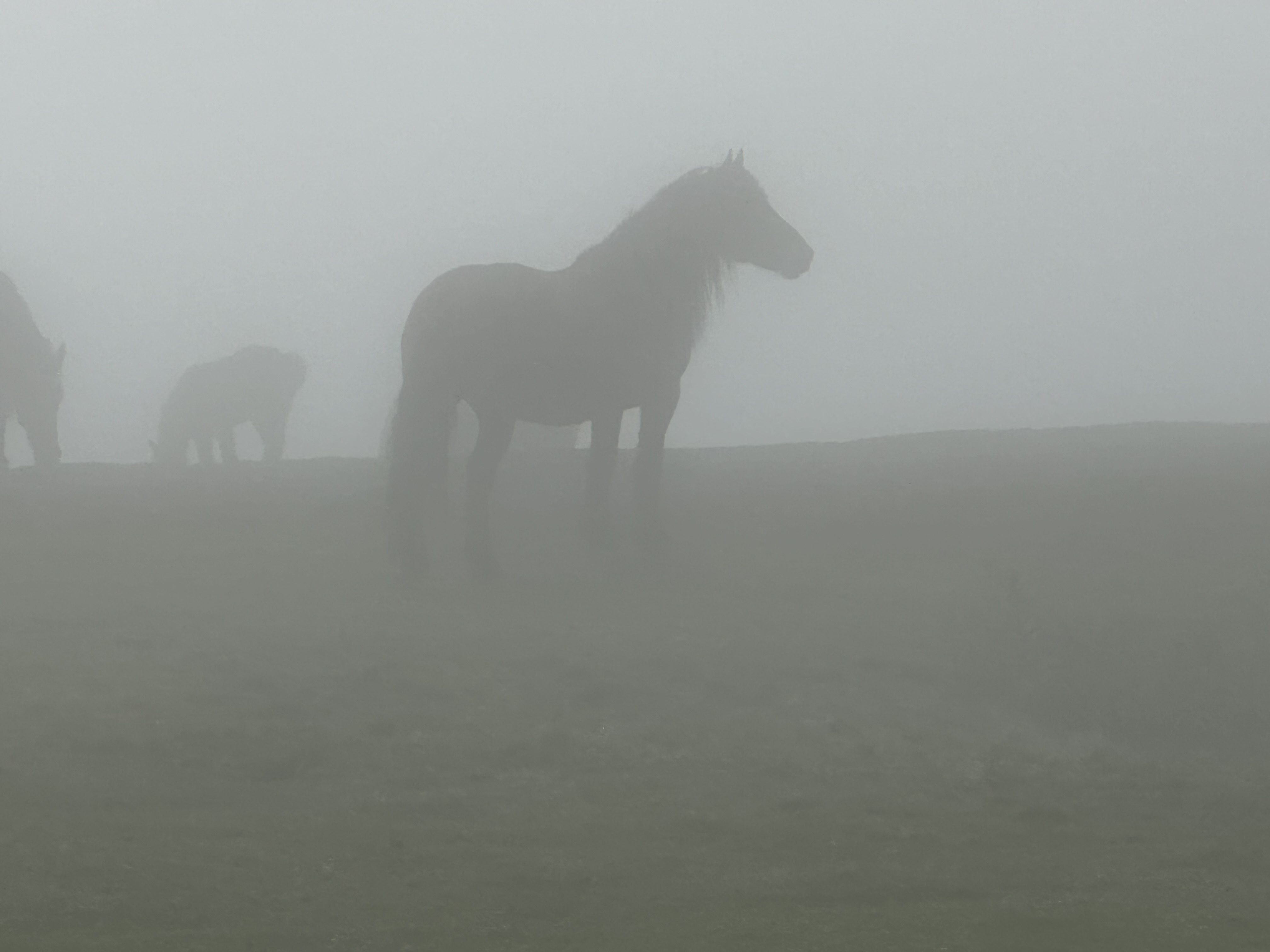
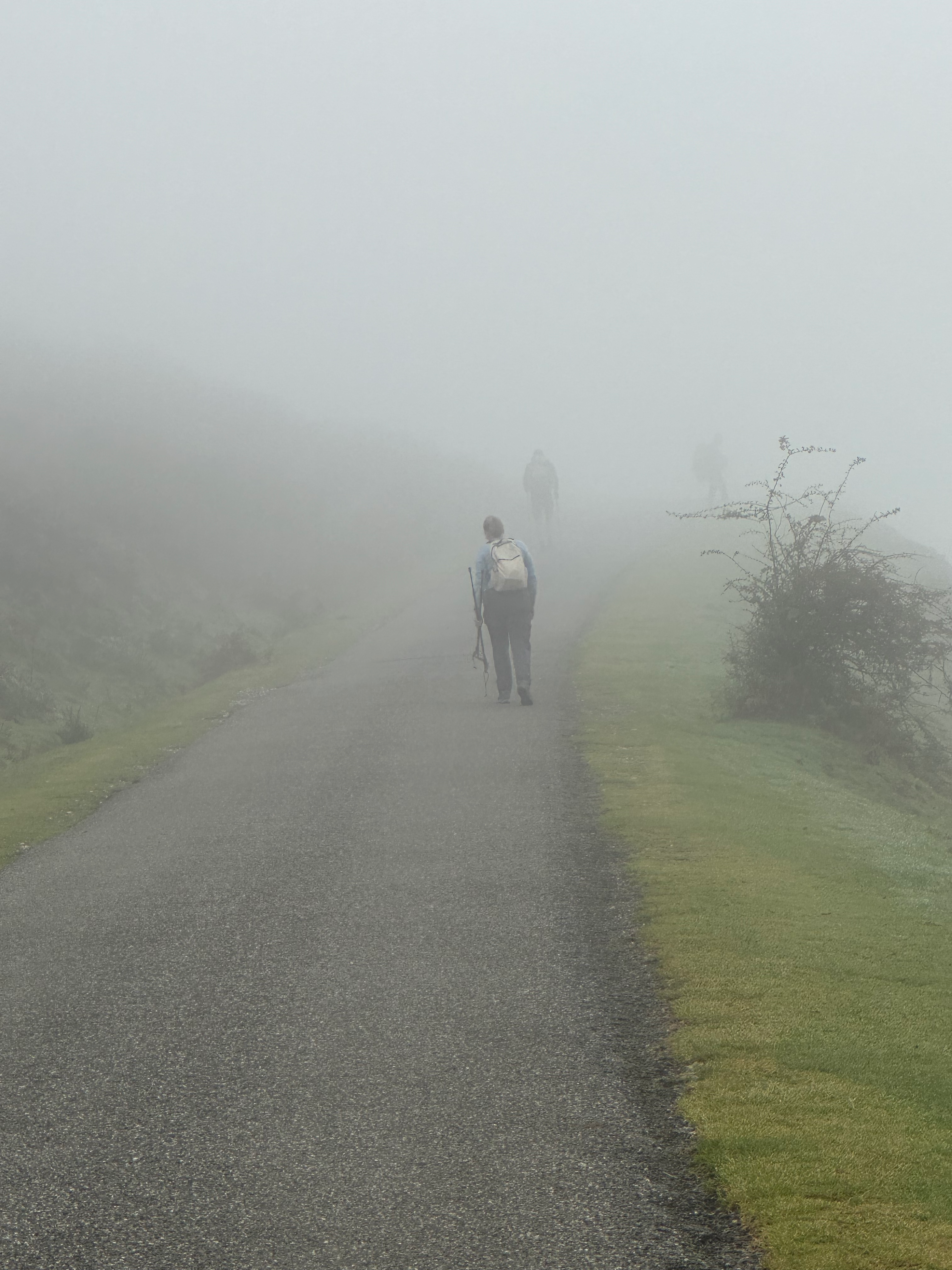
Everything seems quieter in the fog and mist. Or perhaps it was leaving the relative bustle of Orisson that made it seem so. But the path soon wreathed itself in the kind of fog I had only ever seen in England, with only the occasional clanging of a cow bell in the distance to be heard. Sadly, it was not Will Farrell. Happily, it was a string of horses set out to graze along the path. They would move in and out of sight as the the mist flowed about, almost like a river of smoke. The trail was so quiet you could hear the rip and tear of the tough grass being yanked from the ground by the horse’s huge teeth. Now and then a sheep somewhere out of sight would say, “Baa.” And when I say that sheep said “Baa” I mean that damn Basque sheep said “Baa”, perfectly, literally, like it was making fun of what humans think sheep say. “Hey, Pablo, watch me talk like a human to these pilgrims. ‘Baa. Baa.’ ” It was hilarious. Though I was the only one laughing. I blame Monty Python.
We kept walking, keeping pace with a fellow pilgrim named Abel, from Peru, and two ladies our age from Germany, until we made it to the spot where the statue of the Virgin Mary was supposed to be, but we didn’t see it anywhere. And Stacy has Mom eyes, so she has the ability to find a single loose sock in a teenager’s unkempt room, and she didn’t see it either. And then, like a scene in a 1940’s movie, the fog swirled and flowed away revealing a bright blue sky and a rocky mound with a statue of the Virgin Mary perched on the very top. There she was! The Virgin de’ Orisson, and wow! What an entrance! She was about three feet tall and covered in relics left by previous Pilgrims. Her paint was chipped, and she was slightly weathered, but not weathered as much as I expected after seeing all the super old stuff at St Jean. She was holding the infant Jesus in front of her and she had the strangest look on her face, I swear it was kind of…sarcastic….the eyebrows were arched in a manner the women in my family use when they are politely listening to people they hate. Your take may differ, and I hope it does.
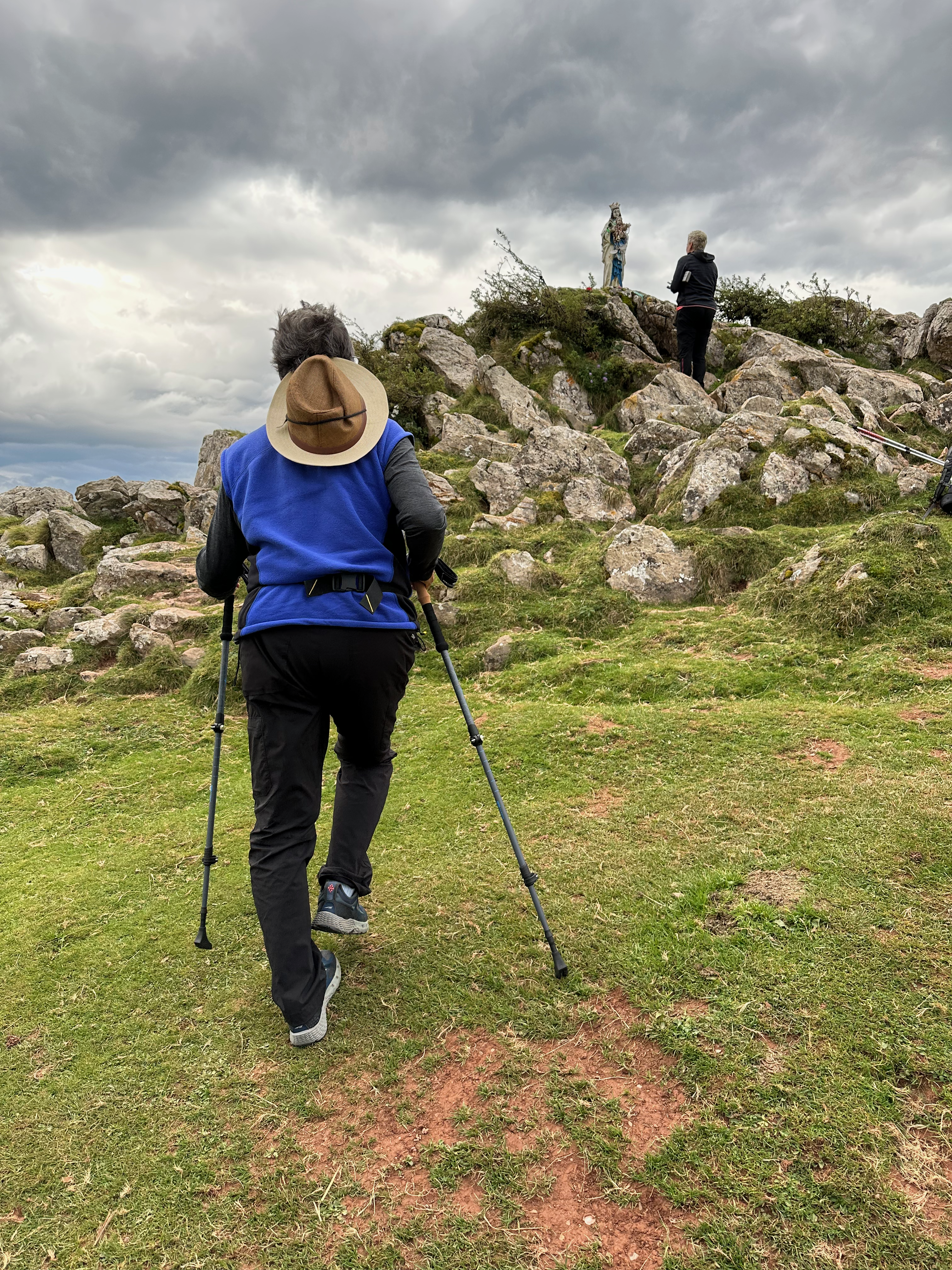
So we made ourselves comfortable on the hillock that surrounded the Virgin (I love that I am accurately and appropriately using the word ‘hillock’), feeling a little let down by the blandness of the Virgin. The thing is I grew up in San Antonio, Texas, and Stacy is an Episcopal priest: we’ve seen a lot of Virgins. Statues, I mean. And compared to the green pastures, the swirling mists, the upwards trail, the sweeping vistas, the smiling Basque cheesemonger, the tattoodled teens and the Koreans, the bankers and the beautiful, and all the other sights and sounds we experienced on our first day on the Camino, the Virgin, her entrance notwithstanding, was less than inspiring.
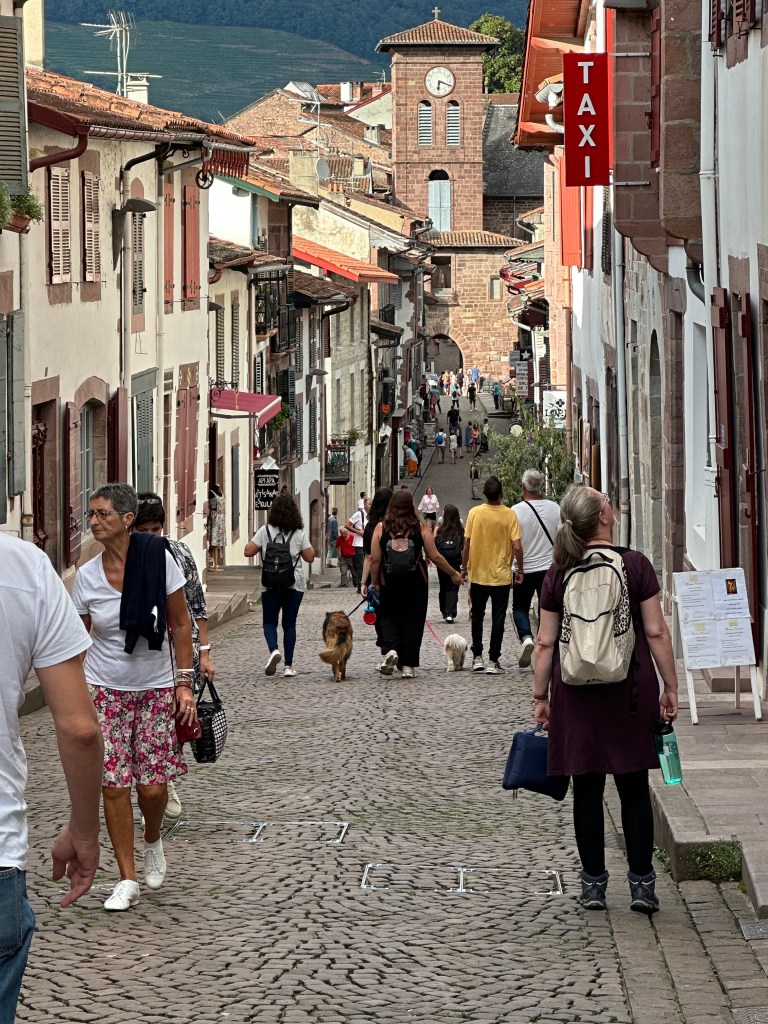
We waited just long enough to worry that we were going to be left there, and then our ride came for us. Back at St Jean, we were exhausted, but content and full of knowledge about what this whole Camino thing was going to look like. And though we didn’t know it at the time, we actually had experienced about seventy-five percent of everything the Camino was: we hiked, enjoyed a cool family-run albergue, endured a corporate run albergue, met a bunch of strangers, saw beautiful sights, saw boring sights. And as we drifted off to sleep with the ear-plug muted sounds of three people snoring in foreign languages, I started to feel a lot more at peace. Or I was totally exhausted. There’s a fine line between tired and peaceful, and the next day I was going to watch that line be blown away by thirty mile an hour winds. Stay tuned.













 buddha meets jesus